
Back to: The Making of a Man
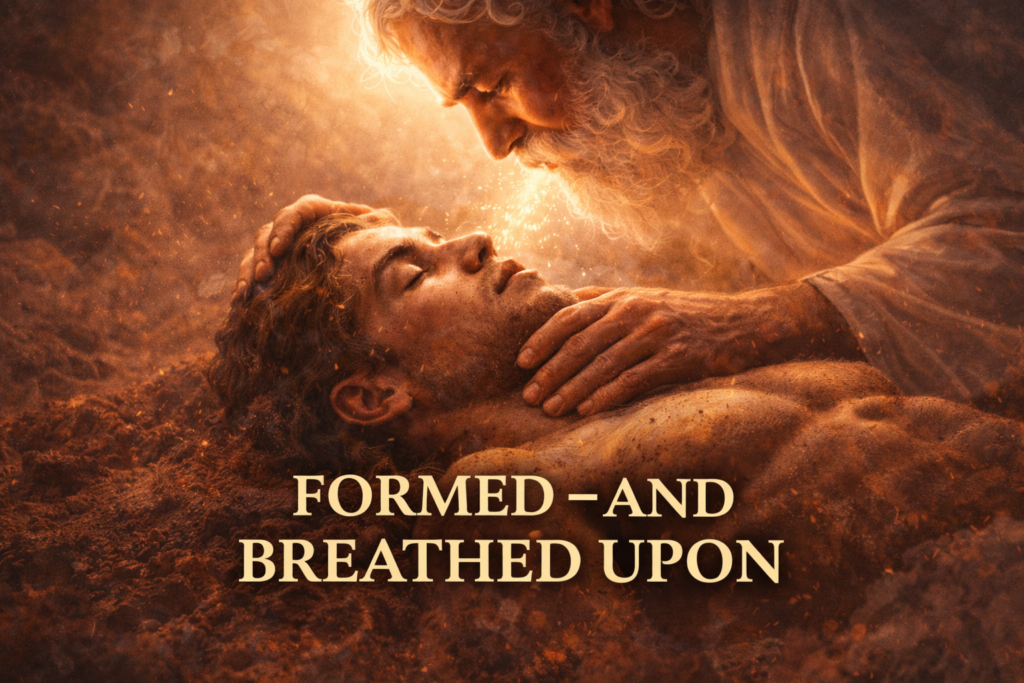
To better understand how a man is made, we must return to creation.
Scripture tells us that man was formed from the dust of the earth. God breath into the dust-man and we were reported in the bible to then become living souls. This breath is more than the perceived biological life. It was and is intimacy – his embedded presence and spiritual capacity.
Of all God’s creation, human beings alone are: formed from the earth, animated by the breath of God and carrying spiritual capacity. This is what makes us unique. God’s breath gives man awareness, conscience, creativity, and the ability to relate to Him. It enables worship, our moral choice, love, and reflection of God’s character. Man is therefore both humble and majestic. This explains much of the human experience that our limitations and longings both coexist, fragility and faith can live side by side, and man is though earthly, yet drawn toward eternity. Human dignity flows directly from this moment. Man is most definitely and intentionally formed under attention.
When we hear the word mindfulness today, we often think of mental focus, awareness, or calming techniques. But in Scripture, mindfulness means something far deeper.
First, mindfulness is God’s covenant attention. It describes God’s intentional, faithful, love-rooted attentiveness toward us —and the invitation for us to respond in kind. So, when David asks, “What is man that You are mindful of him?”, he is expressing awe that the Creator’s attention is personal, constant, and committed. David looks at the heavens—the moon, the stars, the vastness of creation—and feels so small in comparism, infact, overwhelmed beyond comprehension that God who governs the earth is attentive to every human heart.
Unlike human attention, which is often fragmented or selective, God’s attentiveness is deliberate and unbroken. It is active care. Human significance does not come from strength, scale, or productivity—but from being the object of God’s faithful attention. And that is astonishing. How about you knowing that God formed you to be the object of thoughts and mindfulness? A creature that captivates His continuous thinking. Do you believe this?
So, God’s mindfulness is constant. You are never unseen. Never overlooked and never abandoned. Jesus reinforces this truth when He teaches that the Father knows every hair on our head and sees even the sparrow that falls. If God is attentive to the smallest details of creation, how much more to those made in His image?
This changes how a man lives. We are not striving to earn God’s attention. We are learning to live from the assurance that we already have it.
Secondly, it is important to know that God’s continuous thinking of us is redemptive and purposeful. God’s thoughts move toward restoration, guidance, and hope.
Jeremiah reminds us, where he said in chapter 29 and verse 11 that God’s thoughts are for peace and a future—not for harm. Long before humanity understood its need, God had already purposed restoration ahead of our strays and failures.
As A. W. Tozer said:
“God’s thoughts toward us are not scattered or idle; they are purposeful, aimed at our ultimate good and His glory.”
A man’s value does not rise or fall with performance. It rests in God’s unchanging regard.
Thirdly, we were formed for presence and relationship.
Yes, from the beginning, we were designed for presence and relationship. God formed man with His hands and breathed life into him to live with Him, and not merely to work for Him. We were made to commune with Him.
We may not know it clearly, but our acts, yearnings and actions commune with him.
How more do we prove our design, relationship is central to human identity?
God placed man in the garden, a space filled with His divine presence. God also declared that it is not good for man to be alone and then we were formed into twos. Human flourishing requires relationship—both vertical and horizontal. This mirrors God Himself, who exists eternally in relational community.
When humanity was expelled from Eden, the rupture was geographical—not relational in intent. God’s desire to dwell with His people never ceased.
Eden was not merely a place. It was a pattern. That pattern reaches its fulfilment in Christ and continues through the Spirit today.
The invitation remains:
Live from presence, and let purpose flow from communion.
For a man being formed by God, mindfulness becomes rhythm. It means intentionally turning attention toward God.
When attentiveness becomes God-centred rather than self-centred, it reshapes character, decisions, and worship. It pulls a man out of distraction and spiritual forgetfulness and anchors him in the assurance that he lives under God’s faithful gaze.
This kind of presence produces gratitude instead of anxiety, obedience instead of striving, and intimacy instead of self-effort.
A man is not formed by pressure. He is formed by presence.